All Your Questions About Real Christmas Trees, Answered
This site contains affiliate links to products. We may receive commission for purchases made through these links. Price at time of publish date may change.
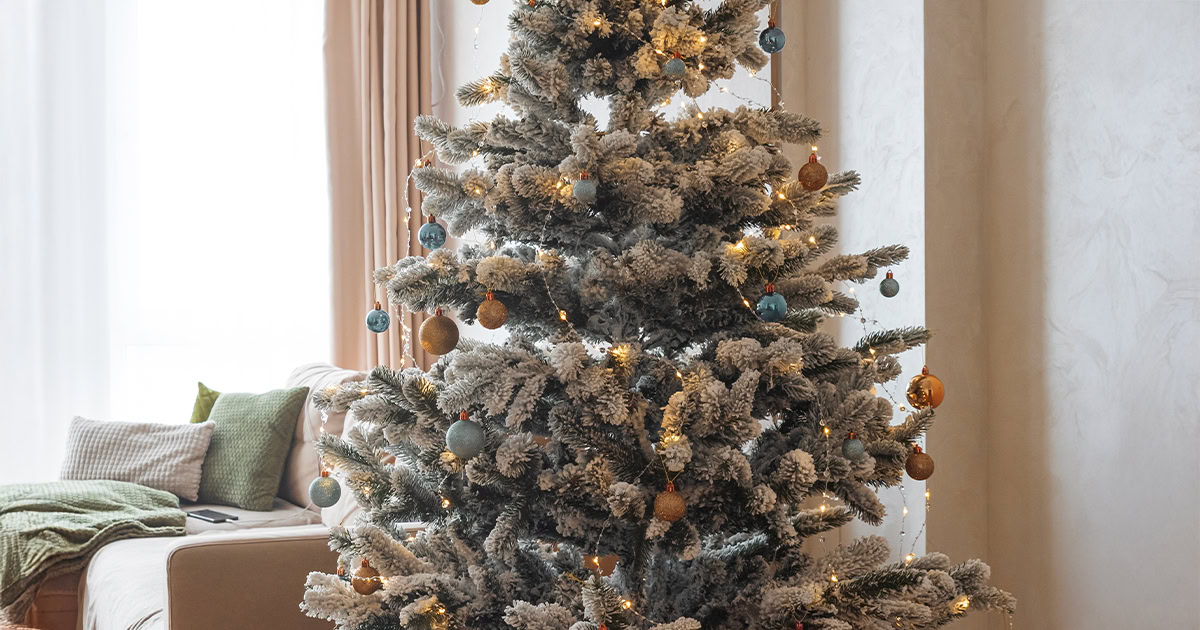
Untangle your twinkly lights and dust off your tree toppers, because Christmas tree season has officially arrived. From Douglas firs to Virginia pines, Christmas trees are one of the most festive ways to make the season feel merry and bright, but the process of buying and taking care of them can be hard to navigate, especially if you’re opting for a live tree over an artificial one.
If you’re ready to get this year’s tree up but are unsure how to choose and maintain one, consider this article your first holiday present. Below, you’ll find answers to the most popular questions about live Christmas trees, from where to get them to how often to water them to how to dispose of them when you’re done. And if you’re looking for tips on where to display your tree, what stand to buy, and creative ways to decorate, we have you covered there, too.
What does the Christmas tree symbolize?
In the broadest sense, Christmas trees have come to symbolize the spirit of community and kindness of the holiday season itself. Since they keep their needles all year long, many people also consider evergreen trees a symbol of eternal life and hope; some even cite them as representations of the Tree of Life.
The roots (get it?) of the Christmas tree concept track back to ancient Pagan beliefs that evergreen trees could ward off witches, ghosts, and evil spirits—which also speaks to the tradition of hanging a wreath on the front door.
How long do Christmas trees last?
If you keep your Christmas tree watered, it should last between four and six weeks from the time it’s cut.
How often should I water a Christmas tree?
Cut trees can drink up to one quart of water per day for each inch of the diameter of the trunk. So, if your tree’s trunk is four inches in diameter, it could drink up to four quarts of water per day. Replenish the water supply accordingly.
Where do I buy a real Christmas tree?
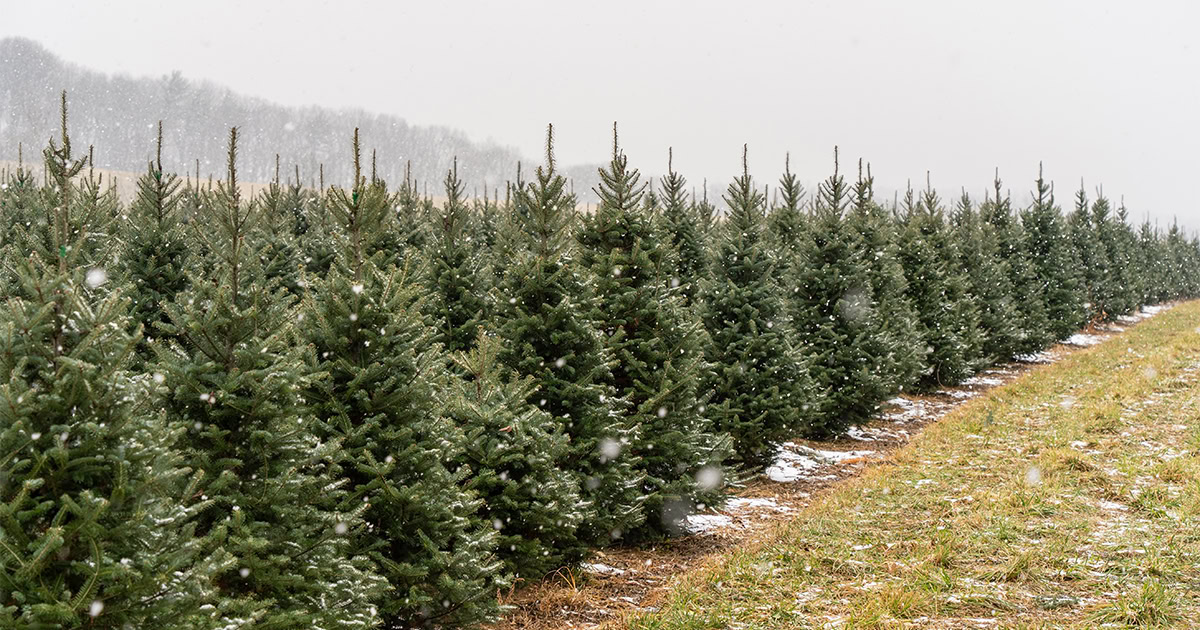
Your options for buying a real Christmas tree can vary depending on where you live. In big cities like New York and Chicago, vendors set up stands to sell trees right on the sidewalks or in vacant lots. In the suburbs, gardening stores as well as big-box chains like Home Depot, Lowe’s, and Walmart stock real trees. Further out in more rural areas, you can visit a Christmas tree farm where, depending on the farm, you can choose pre-cut trees or even cut one down yourself.
How do I know what tree to choose?
Choosing the right Christmas tree starts with assessing the size and layout of your space. Measure the area where you’re going to put it—height and width—and go shopping with those dimensions in mind.
You want to select a species of tree that will survive well in your climate, with foliage that will best accommodate the types of decorations you plan to display.
If you go with a pre-cut tree, you can perform some quick tests to assess its freshness. If you run your hand over a branch, the needles shouldn’t come off easily, and if you bend one of the outer branches, they should be pliable, not brittle.
How much are real Christmas trees?
Christmas tree prices depend on the size and freshness of the tree, along with other factors like the type of tree, where you live, and the store or farm where you buy it. Home Depot, for instance, has trees starting at $50 and going up to $200+. At Lowe’s, however, prices vary by location. In urban areas where trees are already cut and brought into town, trees can even cost over $1,000. Christmas trees from local tree farms typically range from $60 to $150, depending on the size of the tree.
How do I keep cats out of the Christmas tree?
If your household includes a cat (or three, like Jonathan’s!), make sure that they—and your tree—stay safe this season. If your kitty usually steers clear of wire mesh or tin foil, you can wrap the tree base to keep curious cats away. Another simple solution is to surround your tree base with a pet gate, and be sure to position the tree away from any obvious launching points, like high shelves, tall furniture, and cat trees. As far as decorations go, low-hanging ornaments and sparkly tinsel might as well be an invitation for frisky felines to play, so we recommend styling them a few branches up from the lowest.
For artificial trees, a spinning Christmas tree stand is an effective and festive way to keep cats off the tree—and it even makes it easier to decorate hard-to-reach places.
What are some of the best stands for real Christmas trees?
Our top pick for the overall best Christmas tree stand is the high-quality, user-friendly Krinner Genie stand, which has racked up more than 9,000 5-star Amazon reviews and an overall rating of 4.6/5 stars. For more options, take a look at our full list of the best Christmas tree stands you can buy at retailers like Lowe’s, Walmart, and (of course) Amazon.
Can you replant a Christmas tree?
Cut trees cannot be replanted. However, if you have a potted tree with intact roots, you can replant it outside.
How do you dispose of a real Christmas tree? And when should you throw it out?
When the needles start to dry out and fall off more rapidly, it’s time to say goodbye to your tree. The National Christmas Tree Organization, an advocacy group for the farm-grown Christmas tree industry, offers a slew of suggestions for ways and places to recycle real Christmas trees.
If you expect your tree to be taken away with your trash, be sure to check your local government website for guidelines on what is and isn’t allowed. Lots of municipalities specifically offer Christmas tree removal services in the first few weeks of January.
17 Christmas Tree Skirts to Make Your Gifts Look Even Better
Your decor isn’t complete without one!
Read More

Amy Gordon
Amy Gordon is a freelance writer and editor who splits her time between New York, NY and Vieques, PR. When she’s not at her desk, you’ll probably find her on a plane with her nose in a book, in the Caribbean snorkeling through coral reefs, or on the couch watching true crime TV. Learn more and read her work at www.amygordonmedia.com.
⚖️ How We Choose What to Recommend